

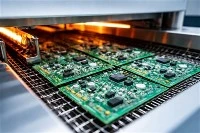



Booming End-Market Demand Drives High-End PCBA Growth
AI data centers are emerging as a top growth driver, with high-density interconnect (HDI) PCBA, server power management boards, and high-layer count assemblies in short supply. Leading manufacturers report a 40% year-over-year (YoY) increase in orders for AI server PCBA, which require ultra-low signal loss, strict thermal management, and compliance with high-reliability standards. This trend has pushed up the adoption of LCP (liquid crystal polymer) substrates and laser direct imaging (LDI) for finer line widths and spacing.
EV and automotive electronics continue to be a backbone of PCBA demand. EV battery management systems (BMS), infotainment units, and advanced driver assistance systems (ADAS) rely on rugged PCBA that can operate in wide temperature ranges (-40°C to 125°C) and resist vibration. Industry data shows that the average EV uses 4–5 times more PCBA modules than traditional combustion engine vehicles, with YoY growth in automotive PCBA shipments exceeding 35% in the first three quarters of 2025.
Smart home and IoT devices are expanding the mid-range PCBA market, with compact, energy-efficient assemblies for range hoods, smart thermostats, and security cameras. These PCBA often integrate wireless connectivity (Wi-Fi, Bluetooth, Zigbee) and low-power microcontrollers, driving demand for miniaturized components and flexible PCBA (FPCBA) solutions.
Smart Manufacturing & Advanced Testing Lift Quality & Efficiency
Smart manufacturing technologies are becoming table stakes for PCBA producers. Automated SMT lines, AI-powered process monitoring, and digital twins are cutting production lead times by 25–30% while reducing defect rates. Leading factories now have over 80% of their production processes automated, with real-time data analytics to optimize component placement, soldering, and inspection workflows.
Rigorous testing protocols are non-negotiable to meet end-market standards. 100% automated optical inspection (AOI) has become a universal practice for detecting solder bridges, missing components, and misalignment. Complementary tests like X-ray inspection (for BGA/CSP packages), in-circuit testing (ICT), and functional testing (FCT) are widely adopted for high-reliability applications such as medical devices and automotive electronics. This focus on quality has helped reduce field failures by up to 40% for top-tier manufacturers.
Sustainable manufacturing is gaining traction, with manufacturers adopting lead-free soldering, energy-efficient equipment, and waste recycling programs to comply with global environmental regulations. Green PCBA solutions are increasingly a key factor in procurement decisions for large tech firms and automotive OEMs.
Supply Chain Resilience & Regionalization Take Center Stage
Global PCBA supply chains are shifting from over-reliance on single regions to a multi-hub model. Southeast Asia (Thailand, Vietnam) and Mexico have emerged as critical secondary manufacturing hubs, offering lower labor costs and proximity to key markets like North America and Europe. This regionalization helps mitigate trade risks, reduce shipping times, and lower logistics costs.
Component shortages, though less severe than in 2021–2022, still pose challenges for PCBA manufacturers. Proactive inventory management, dual-sourcing strategies for critical components (such as microcontrollers and power ICs), and long-term partnerships with component suppliers have become standard practices to ensure production continuity.
Industry consolidation is accelerating, with larger manufacturers acquiring niche players to expand their technical capabilities and end-market reach. This trend is particularly evident in the high-reliability PCBA segment, where expertise in specialized processes (e.g., buried components, high-frequency assemblies) is highly valued.
Outlook & Key Challenges
The PCBA industry is poised for steady growth through 2026, with a projected compound annual growth rate (CAGR) of 6–7% in global market size. However, challenges remain, including rising raw material costs, tightening regulatory requirements, and the need for continuous R&D in advanced assembly technologies. Manufacturers that invest in talent, digital transformation, and customer-centric innovation will be best positioned to capture opportunities in this dynamic market.
For businesses looking to source PCBA, prioritizing suppliers with robust smart manufacturing capabilities, comprehensive testing protocols, and regional production options will be critical to mitigating risks and meeting product deadlines.


