
Your PCBA Manufacturing Partner in China and Malaysia for OEM, ODM and Joint Design Projects
High Quality
BQC delivers high-reliability PCBA solutions certified to ISO9001/ISO14001/ISO13485/IATF16949 standards. Our precision manufacturing features 100% AOI/SPI inspection, conformal coating, and rigorous functional testing - proven by 25GWh+ BMS production with <500ppm defect rates. From medical to automotive grade, we ensure premium quality through:
✔ component sourcing
✔ 24 SMT lines with IPC Class 3 standards
✔ Lifetime technical support
Custom Service
As a leading EMS provider, BQC offers customized OEM and ODM PCBA services, including PCB assembly, mechanical design, box-build assembly and functional testing. We support a wide range of industries, including energy storage BMS, industrial control, consumer electronics, communication equipment, medical devices and custom electronic products.
One-stop Solution
BQC Electronics provides a one-stop PCBA solution, covering the entire process from component sourcing (full turnkey service), manufacturing and testing to logistics support with dock-to-dock and dock-to-market delivery options - freeing our clients to focus on their core sales and marketing initiatives.
Competitive Price
BQC delivers competitive PCBA pricing through vertical integration (24 SMT lines), privileged component sourcing (ADI/TI/NXP), and design optimization. Our JDSM team cuts costs by 30-45% vs Western suppliers while maintaining IATF16949/ISO13485 standards. Prototype to mass production with transparent MOQ-based pricing - request a quote in 48h.
PCBA (Printed Circuit Board Assembly) is the core process of soldering/assembling electronic components onto a printed circuit board (PCB) to produce a functional circuit boards.
High-Density Integration
PCBA enables compact circuit designs with high-density interconnects (HDI), allowing for miniaturization in devices like smartphones and wearables.
Multi-Layer Circuitry
Supports complex electronic designs through multi-layer stacking (4+ layers), essential for advanced applications such as servers and medical equipment.
Precision SMT Assembly
Utilizes Surface Mount Technology (SMT) to achieve precise placement of miniature components, ensuring efficient equipment operation and reliable performance.
Signal Integrity Optimization
Features controlled impedance traces and shielding to maintain signal clarity, critical for high-speed and RF applications like 5G and IoT.
Industry Compliance
Adheres to strict standards (IPC, RoHS) for quality and environmental safety, making it suitable for automotive, , and medical uses.
Automated Quality Assurance
Employs AOI (Automated Optical Inspection) and ICT (In-Circuit Testing) to detect defects and ensure production consistency.
Design Flexibility
Offers rigid, flexible, or rigid-flex PCB options to meet diverse mechanical and space requirements in modern electronics.
Scalable Production
Supports cost-effective mass production while accommodating prototyping needs for rapid product development.
Multipurpose Applications
Widely used in consumer electronics, industrial automation, automotive systems, and renewable energy solutions.
Single-Sided PCBA
Components are mounted on one side of the PCB, ideal for simple circuits like calculators and LED lights. Cost-effective and easy to manufacture.
Double-Sided PCBA
Components are mounted on both sides of the PCB, offering higher circuit density. Commonly used in power supplies and automotive dashboards.
Multi-Layer PCBA
Features 4 or more layers of circuitry, enabling complex designs for advanced applications like servers, 5G equipment, and medical devices.
Rigid PCBA
Made from solid substrates like FR4, providing durability for stable environments. Used in motherboards and industrial control systems.
Flexible PCBA (FPCBA)
Constructed with bendable materials like polyimide, perfect for wearables, foldable phones, and compact devices requiring flexibility.
Rigid-Flex PCBA
Combines rigid and flexible sections, offering both stability and adaptability. Ideal for , , and high-end medical equipment.
High-Frequency PCBA
Designed for RF and microwave applications, such as radar and 5G communications, with specialized materials to minimize signal loss.
Metal-Core PCBA
Incorporates metal substrates (e.g., aluminum) for superior heat dissipation, commonly used in LED lighting and power electronics.
Prototype PCBA
Low-volume production for testing and validation before mass manufacturing, ensuring design accuracy and functionality.
High-Density Interconnect (HDI) PCBA
Utilizes microvias and fine traces to achieve ultra-compact designs, essential for smartphones and advanced IoT devices.

FR4 (Fiberglass Epoxy)
The most widely used substrate for rigid PCBs, FR4 offers excellent electrical insulation, mechanical strength, and flame resistance. Ideal for consumer electronics and industrial applications.
Polyimide
A flexible substrate material known for high heat resistance and durability. Used in flexible PCBAs (FPCBA) for wearables, foldable devices, and applications.
Aluminum
Metal-core PCBs use aluminum substrates for superior heat dissipation. Commonly found in LED lighting, power electronics, and automotive systems.
Ceramic
Ceramic substrates, such as Al₂O₃ and AlN, are used in high-frequency, high-temperature and high-power PCBAs, including 5G communication equipment, RF modules and power electronics.
Copper
Essential for conductive traces and planes, copper ensures efficient signal transmission. Often plated with gold or tin for corrosion resistance.
Solder (SAC305)
Lead-free solder alloy (Sn96.5/Ag3.0/Cu0.5) compliant with RoHS standards, used for component attachment in environmentally sensitive applications.
Solder Mask (LPI)
Liquid Photoimageable solder mask (typically green or black) insulates copper traces and prevents short circuits while providing a protective layer.
Silkscreen (Epoxy Ink)
Used for component labels, logos, and markings, ensuring clear identification during assembly and maintenance.
(Where Our Precision Electronics Power Innovation)
Industrial Automation
Motor control systems
PLC interface boards
Sensor networks
Energy Storage (BESS)
Battery Management Systems (BMS)
Inverter control boards
Solar monitoring PCBs
Medical Electronics
Diagnostic equipment
Therapeutic devices
Patient monitoring systems
Automotive Solutions
EV charging controllers
ADAS circuit boards
Infotainment systems
Robotics & AI
Vacuum robot controllers
Industrial robot arms
Machine vision systems
IoT & Connectivity
Wireless modules
Gateway controllers
Smart sensor nodes
(Precision Manufacturing from Design to Delivery)
Design & Preparation
3D Design Confirmation
Material Certification Review
PCB Fabrication
Layer Stackup & Etching
AOI Inspection
Component Assembly
SMT Pick-and-Place (24 Lines)
Reflow Soldering (10 Zones)
Post-Assembly Processes
Conformal Coating (10 Lines)
Functional Testing (ICT/FCT)
Quality Validation
X-Ray Inspection (BGA/QFN)
Reliability Testing (HALT/HASS)
Packaging & Delivery
Anti-ESD Packaging
Global Logistics Support
(Printed Circuit Board Assembly Building Blocks)
Base Structure
● PCB: Fiberglass substrate with copper traces
Active Components
● ICs/Microcontrollers
● Transistors/Diodes
● Connectors
Passive Components
● Resistors/Capacitors
● Inductors/Fuses
Protection Elements
● Conformal Coating
● Heat Sinks
● ESD Protection
Assembly Materials
● Solder Paste
● Adhesives
● Silkscreen
(Keep Your Circuit Boards in Optimal Condition)
Regular Inspections
Check for corrosion/dust buildup
Verify connector integrity
Inspect solder joints
01
Proper Cleaning
Use isopropyl alcohol (90%+)
Soft brush/compressed air only
Never abrasive materials
02
ESD Protection
Always use grounded workstations
Wear anti-static wrist straps
Store in shielded bags
03
Preventive Care
Apply conformal coating if needed
Control humidity (30-60% RH)
Avoid extreme temperatures
04
Professional Support
BQC offers:
Lifetime technical support
Component replacement
Repair services
05
Share Requirements
Upload your Gerber files, BOM, technical specifications, assembly drawings and target quantities.

DFM Analysis & Quote
24-Hour Turnaround: Design for Manufacturability report and Competitive pricing

Prototype Verification
Rigorous testing: Functional validation, Environmental stress tests, Compliance checksSelection recommendation
Technical Support

Mass Production
Full-capacity manufacturing: 24 SMT lines, 100% AOI/SPI testing and Conformal coating available

On-Time Delivery
Global logistics support: Real-time tracking, ESD-safe packaging and Customs documentation
◆ Our certificates
|
|
|

ISO9001 |
|
|

SGS |

CE |
|
UL |
IKEA quality standard |
Walmart REPORT |
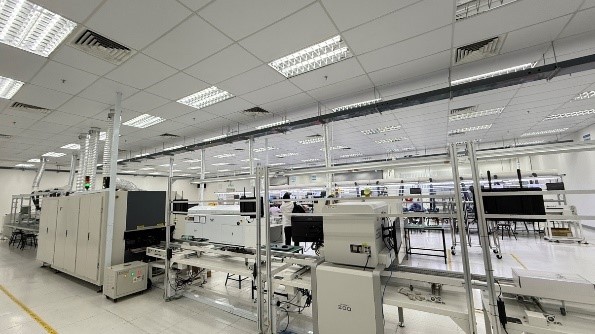
◆Our Malaysia PCBA factory has already commenced mass production runs, and it successfully passed the dual certification audits of ISO 13485:2016 and ISO 9001:2015 in September 2025.

Cases


Q: 1.What services does BQC offer for PCBA?
A: BQC provides Joint Design Service & Manufacturing (JDSM), OEM services, hardware design, and full turnkey PCBA solutions.
Q: 2.What industries does BQC serve with PCBA solutions?
A: Energy storage (BESS), AI robotics, medical electronics, automotive, ventilation systems, and industrial control.
Q: 3.Can BQC assist with hardware design if our team lacks resources?
A: Yes, BQC can create schematics, layouts, and select components based on your specifications.
Q: 4.What certifications does BQC hold for PCBA manufacturing?
A: ISO 9001, ISO 13485 (medical), IATF 16949 (automotive), ISO 14001, and SA8000.
Q: 5.What is BQC's PCBA production capacity?
A: 24 SMT lines, 4 THT lines, 10 conformal coating lines, and 4 functional test lines.
Q: 6.How does BQC ensure PCBA quality?
A: Advanced testing equipment (AOI, SPI, ICT, X-RAY) and validation engineers oversee quality control.
Q: 7.Can BQC source hard-to-find components?
A: Yes, BQC has privileged allocations from top suppliers (ST, NXP, ADI, TI) and access to spot markets.
Q: 8.What if a key MCU is out of stock?
A: BQC offers alternatives from domestic brands with 30% cost reduction and 12–16-week lead times.
Q: 9.Does BQC support prototyping and NPI (New Product Introduction)?
A: Yes, with dedicated NPI engineers and rapid prototyping capabilities.
Q: 10.What is BQC's lead time for PCBA orders?
A: Lead times vary but are optimized through in-house inventory and streamlined processes.
Q: 11.Does BQC provide conformal coating for PCBAs?
A: Yes, with 10 dedicated conformal coating lines for environmental protection.
Q: 12.Can BQC design custom enclosures for PCBAs?
A: Yes, BQC offers ID/MD design for plastic/metal shells based on your requirements.
Q: 13.What file formats are needed for PCBA orders?
A: Gerber files, BOM, schematics, and assembly drawings are standard.
Q: 14.Does BQC support high-mix, low-volume PCBA production?
A: Yes, flexible production lines accommodate diverse order sizes.
Q: 15.How does BQC handle component obsolescence?
A: Proactive lifecycle management and alternative part recommendations.
Q: 16.What testing is included in PCBA services?
A: Functional testing, burn-in, ICT, and automated optical inspection (AOI).
Q: 17.Can BQC program microcontrollers during assembly?
A: Yes, with self-made automated programming and testing equipment.
Q: 18.Does BQC offer warehousing or consignment for components?
A: Yes, component stocking and JIT (Just-in-Time) services are available.
Q: 19.What is BQC's approach to sustainability in PCBA manufacturing?
A: Compliance with carbon neutrality goals and eco-friendly processes (e.g., lead-free soldering).
Q: 20.How do I request a PCBA quote from BQC?
A: Contact via email (arvin@bgcdz.com) or website (www.bqcdz.com) with project details.

 ITAF16949
 ISO13485
 ISO14001

