


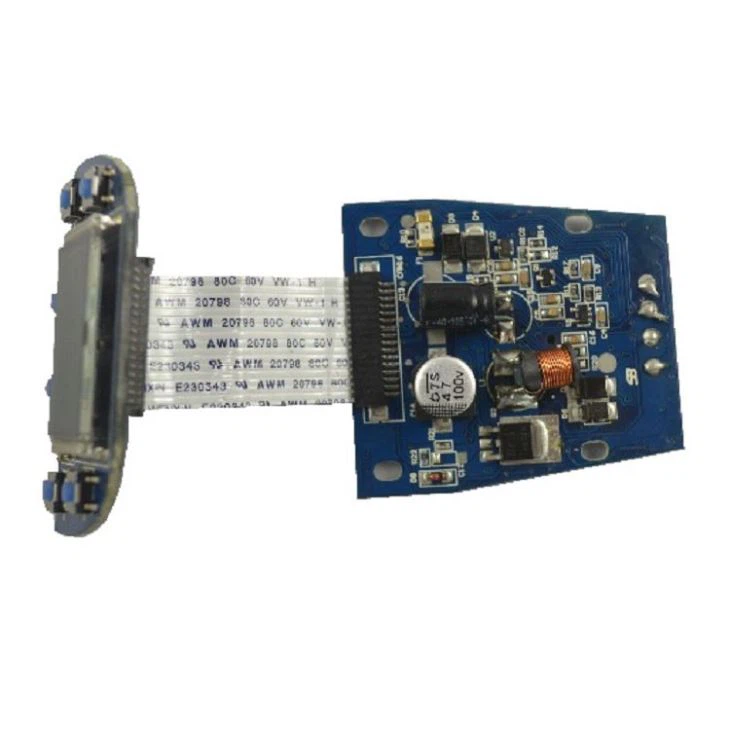
Our company aims to operating faithfully, serving to all of our customers, and working in new technology and new machine constantly for One Stop pcba electronic contact main-board, Security Smt Pcb Assembly Service, Turnkey PCB Assembly Service. We are looking forward to establishing long-term business relationships with you. Let all parts of the world enjoy the happiness brought by our products. We are conquering the hearts of consumers in the world with our high quality and excellent service. Our company always adheres to steady operation, attaches importance to the concept of integrity and corporate image management, laying the foundation for the sustainable operation of enterprises. Do the best brand, do the best quality products, do the best after-sales service is our purpose. Our company has always advocated the principle of consumer first.
ISO 16949 Standard SMT PCB Assembly
Technical Specifications, Applications and Service Capabilities
1. Introduction-anout ISO16949 SMT PCB Assembly
ISO 16949 is an international quality management standard exclusively developed for the automotive industry. It integrates the core principles of ISO 9001 while incorporating additional industry-specific requirements, such as supply chain management, process risk prevention, and product traceability. For Surface Mount Technology (SMT) PCB assembly, compliance with ISO 16949 means the entire production process must be tailored to meet the high reliability, long service life, and harsh operating condition demands of automotive electronics. Every stage-from raw material selection and placement accuracy control to finished product testing and verification-must adhere to top-tier industry standards.
SMT PCB assemblies manufactured in accordance with ISO 16949 can maintain stable operation in extreme automotive environments. These include vehicle control systems (which withstand continuous vibration and voltage fluctuations), in-vehicle infotainment systems (requiring long-term data transmission stability), and Advanced Driver Assistance Systems (ADAS, which demand ultra-high signal processing precision). As such, they provide critical hardware support for automotive safety and performance.
2. Specifications
ISO16949 SMT
2.1 Standards Compliance
The ISO16949 SMT PCB Assembly entire process adheres to the ISO 16949 certification system, covering supplier qualification audits (requiring IATF 16949-compliant certification documents), production process parameter monitoring (e.g., real-time recording and traceability of reflow oven temperature profiles), and finished product quality archiving (quality data for each batch must be retained for at least 10 years). This ensures full alignment with the automotive industry's requirements for product consistency and traceability.
2.2 Component Types
Supports the mounting of all types of electronic components, including conventional passive components (resistors, capacitors, inductors with a precision of ±1% or higher) and active components (IC chips, LED light sources, sensors). It also specifically accommodates automotive-grade dedicated components, such as high-temperature-resistant automotive MCUs (operating temperature range: -40°C to 150°C), automotive-grade sensors (with electromagnetic interference resistance), and high-reliability connectors (with a mating cycle life of ≥1,000 times). All components must provide complete AEC-Q series certification reports.
2.3 Soldering Process
Employs lead-free soldering technology (compliant with RoHS 2.0 and subsequent revised environmental requirements). The mainstream process is lead-free reflow soldering (typically using SAC305 solder with a melting point of 217°C), while lead-free wave soldering is used for specific special solder joints. During the soldering process, reflow oven temperature profiles must be optimized (8-10 stage heating/soaking/cooling profiles customized for different component types), ensuring a solder joint void rate of ≤5% (≤3% for precision components like BGAs) to meet the long-term solder joint reliability requirements of automotive electronics.
2.4 Assembly Tolerance
Relies on high-precision SMT equipment (e.g., Fuji NX series or Yamaha YSM series placement machines) to achieve micron-level placement accuracy. The center positioning deviation of components is controlled within ±0.05mm, and pin alignment deviation is ≤0.03mm. For fine-pitch components (e.g., 01005 packages, QFPs with a pin pitch of ≤0.4mm), additional machine vision calibration is required to ensure a placement yield of ≥99.95%.
2.5 Testing
Implements a full-process testing system:
Post-placement: 100% Automated Optical Inspection (AOI) with a resolution of ≥5μm, capable of identifying over 20 types of defects (e.g., missing components, misalignment, cold solder joints).
Post-soldering: X-ray inspection (for bottom-side solder joints of BGAs, CSPs, etc.) to detect internal voids and bridging through components.
Functional verification: In-Circuit Testing (ICT) covering over 98% of circuit nodes to detect open circuits, short circuits, and component parameter deviations.
Sampling verification: 0.5%-1% of samples per batch undergo environmental testing (e.g., temperature cycling, vibration testing).
2.6 Temperature Tolerance
Finished products can operate stably in extreme temperature ranges. The standard operating temperature range is -40°C to 125°C, while customized products (e.g., PCBs for engine compartments) can withstand temperature fluctuations from -55°C to 150°C. After temperature cycling testing (alternating between -40°C and 125°C, 30 minutes per cycle, 1,000 cycles total), circuit performance degradation is ≤5%.
2.7 Material
The ISO16949 SMT PCB Assembly substrate uses high glass transition temperature (Tg) FR4 material, with a standard Tg value of ≥170°C and a high-reliability version Tg of ≥200°C. Substrate thickness varies by application scenario (0.8mm, 1.0mm, 1.6mm, etc.), and copper foil thickness is ≥1oz (to ensure current-carrying capacity and heat dissipation performance). Surface finishes include immersion gold (high corrosion resistance, suitable for high-frequency signals), hot air solder leveling (HASL, cost-effective), or Organic Solderability Preservative (OSP, environmentally friendly and suitable for fine-pitch soldering)-all meeting the long-term service requirements of the automotive industry.
3. Functions and Applications
ISO 16949-certified SMT PCB assemblies are widely used across the automotive electronics industry, with key applications and functions as follows:
3.1 Engine Control Units (ECUs)
As the "brain" of the engine, the SMT PCB in ECUs enables real-time data processing and precise control. It collects signals from over 20 sensors (e.g., throttle position, fuel pressure, intake air temperature) and calculates the optimal fuel injection volume and ignition timing within milliseconds. It also monitors exhaust emission indicators (e.g., NOx, CO concentrations) to balance engine power output and environmental compliance. Additionally, the PCB must withstand high temperatures (over 100°C) and continuous vibration in the engine compartment.
3.2 Infotainment Systems
Serving as the core hardware for in-vehicle entertainment, navigation, and connectivity, the SMT PCB integrates multi-module circuits:
Multimedia decoding chips (supporting 4K video playback).
GPS positioning modules (positioning accuracy ≤10m).
Bluetooth/Wi-Fi communication modules (supporting simultaneous multi-device connections).
Touchscreen driver circuits.
The PCB design optimizes signal integrity to avoid electromagnetic interference (EMI) between modules, ensuring no delays in navigation voice, music playback, or touch operations. It also meets the low-power requirements of in-vehicle environments (standby current ≤10mA).
3.3 Safety Systems
SMT PCBs are critical to vehicle safety, with applications in airbag controllers, Anti-lock Braking Systems (ABS), and Electronic Stability Control (ESC) systems:
Airbag Controllers: The PCB precisely controls the deployment timing and force of airbags at different positions within ≤50ms of a collision to prevent false deployment or delays.
ABS/ESC Systems: By collecting wheel speed sensor signals, the PCB calculates wheel slip rate in real time and adjusts brake pressure quickly to prevent wheel lock-up or vehicle skidding, ensuring zero delay in brake signal transmission.
3.4 Advanced Driver Assistance Systems (ADAS)
As the core hardware foundation for autonomous driving technology, SMT PCBs support high-precision sensor signal processing and decision-making calculations:
Lane-Keeping Assistance: Processes road marking signals collected by cameras or LiDAR to calculate vehicle lane departure distance and drive steering system adjustments.
Adaptive Cruise Control: Receives distance and speed signals of preceding vehicles from millimeter-wave radar to automatically adjust the vehicle's speed and maintain a safe following distance.
Collision Warning: Integrates multi-sensor data (camera + radar) to issue warnings 1-2 seconds before potential collisions, or even trigger emergency braking.
These PCBs require ultra-high signal processing precision (signal delay ≤1ms) and EMI resistance (to avoid interference from in-vehicle radar, wireless communication, etc.).
3.5 Lighting Systems
SMT PCBs provide stable driving for in-vehicle LED lighting, enabling efficient energy conversion and intelligent control:
Headlights: Drive LED light sources to 实现 automatic high-low beam switching and adaptive dimming (adjusting light range based on road conditions). The PCB supports PWM dimming technology (dimming precision ≥1%) and maintains stable driving current within the temperature range of -40°C to 85°C.
Taillights/Turn Signals: Implement dynamic effects such as sequential turn signals and high-brightness braking. The PCB integrates multi-channel LED driver circuits while meeting automotive electronics requirements for low power consumption (quiescent current ≤5mA) and long service life (operating life ≥50,000 hours).
4. Details

4.1 Production Process Control
In line with the ISO16949 SMT PCB Assembly process approach, a comprehensive management system for "People, Machines, Materials, Methods, Environment, and Measurement" is established:
Personnel: All operators must complete IATF 16949 standard training and skill certification (e.g., SMT operators must master placement parameter calibration and defect identification).
Equipment: SMT production lines (placement machines, reflow ovens, AOI testing equipment) require regular preventive maintenance (maintenance cycle ≤1 month), and key equipment must retain maintenance records and precision calibration reports.
Environment: Production workshops must control temperature and humidity (22±2°C, 45%±5% humidity) and meet ANSI/ESD S20.20 electrostatic protection standards (grounding for floors, workbenches, and personnel; electrostatic voltage ≤100V).
Traceability: Each PCB is assigned a unique traceability code (e.g., QR code), allowing full-process information (raw material batch, production time, operator, testing data) to be queried via the system, with traceability precision down to individual products.

4.2 Material Selection Criteria
All raw materials must meet the strict requirements of the automotive industry, with specific standards as follows:
Substrates: Must comply with IPC-4101 standards, and third-party test reports for parameters (Tg value, thermal conductivity, dielectric constant) must be provided.
Components: Must pass AEC-Q series certification (e.g., AEC-Q100 for integrated circuits, AEC-Q200 for passive components). Suppliers must be included in the Qualified Supplier List (QSL) and undergo regular second-party audits.
Solder: Lead-free solder must comply with J-STD-006 standards. Solder paste storage and use require strict temperature and humidity control (refrigeration temperature: 2-10°C, temperature recovery time ≥4 hours) to prevent solder performance degradation.
4.3 Defect Prevention and Control
Based on the ISO 16949 risk prevention concept, a closed-loop "Prevention-Detection-Improvement" system is established:
Prevention: Potential production risks (e.g., component misalignment, solder joint voids) are identified through Failure Mode and Effects Analysis (FMEA), and preventive measures (e.g., optimizing placement parameters, adjusting reflow profiles) are developed in advance.
Detection: In addition to full-process automated testing, quality control points are set (e.g., first-article inspection after placement, sampling review after soldering) to ensure early defect detection and handling.
Improvement: For defects identified during testing (e.g., 0.1% cold solder joints in a batch), root cause analysis (5Why method) is initiated. Corrective and preventive actions (e.g., adjusting solder paste printing pressure) are developed, and improvement effectiveness is verified to avoid recurrence of similar issues.
5. Qualification
modular title
Lorem ipsum dolor sit amet consectetur adipisicing elit
5.1 Certification Requirements
Manufacturers must hold a complete ISO 16949 (IATF 16949) system certification, with the certification scope covering the entire SMT PCB assembly process (from design and production to testing). Additionally, key production processes (e.g., soldering, testing) must comply with industry-specific standards:
Soldering processes must meet IPC-A-610 Class 3 (the highest reliability requirement for automotive products).
Testing methods must comply with IPC-J-STD-001 soldering consistency standards.
5.2 Supplier Qualification
Upstream suppliers undergo strict qualification audits, covering:
Certification: Suppliers must hold certifications such as IATF 16949 and ISO 9001.
Quality Capability: Provision of quality data for the past 6 months (e.g., batch pass rate, defect rate), with requirements for batch pass rate ≥99.5% and defect rate ≤100ppm for key components (e.g., automotive-grade ICs).
Delivery Capability: Evaluation of supplier production stability and on-time delivery rate (requirement: ≥98%) to ensure no supply chain disruptions.
Continuous Improvement: Suppliers must establish an internal quality improvement mechanism and submit monthly quality reports and improvement plans.
5.3 Product Qualification Testing
Finished products must pass multiple rounds of rigorous testing before market launch, with core test items including:
Electrical Performance Testing: Testing of PCB circuit continuity, insulation resistance (≥100MΩ), and voltage resistance (≥500V AC, no breakdown for 1 minute).
Environmental Reliability Testing: Temperature cycling testing (-40°C to 125°C, 1,000 cycles), damp heat testing (40°C, 95% humidity, 1,000 hours), and vibration testing (10-2000Hz, 20G acceleration, 2 hours per X/Y/Z axis). After testing, products must show no mechanical damage and normal electrical performance.
Life Testing: Simulation of long-term in-vehicle use (e.g., continuous operation at 85°C for 10,000 hours). After testing, degradation of key parameters (e.g., signal transmission rate, driving current) is ≤10%.
Compliance Testing: RoHS environmental testing (restricting over 10 hazardous substances such as lead and cadmium) and EMC electromagnetic compatibility testing (compliant with CISPR 25 automotive electronics EMC standards).
6. FAQ
6.1 What makes ISO 16949 SMT PCB assembly different from standard PCB assembly?
Compared with standard PCB assembly, ISO 16949-compliant SMT PCB assembly differs in three core aspects:
Stricter Quality Control: Focuses not only on finished product qualification but also on full-process traceability (recording every step from raw materials to finished products), process risk prevention (identifying potential issues in advance via FMEA), and meeting the automotive industry's high requirements for product consistency (batch-to-batch parameter deviation ≤2%).
Stronger Environmental Adaptability: Optimized design for extreme automotive conditions (high temperature, vibration, EMI), such as using high-Tg substrates, enhancing solder joint reliability, and adding electromagnetic shielding layers. This ensures stable long-term operation in temperatures ranging from -40°C to 125°C and continuous vibration environments.
More Comprehensive Testing and Verification: In addition to standard AOI and ICT testing, automotive-specific verification (environmental reliability testing, 10,000-hour life testing, EMC testing) is required to ensure compliance with long-term in-vehicle use requirements.
6.2 Is this PCB assembly made by BQC suitable for high-vibration environments?
Yes, BQC's ISO 16949 SMT PCB assemblies are specifically designed for high-vibration environments and offer excellent vibration resistance:
Design: Enhanced mechanical structures (e.g., thickened substrate edges, optimized component layout to avoid center-of-gravity 偏移) and vibration-resistant components (e.g., locked connectors, high-vibration-resistant ICs) are used.
Process: Solder joint morphology is optimized during soldering (increasing solder joint volume, controlling void rate ≤3%). For key components (e.g., BGAs, sensors), underfill technology is additionally used to enhance the bonding strength between solder joints and the substrate.
Verification: Samples from each batch undergo rigorous vibration testing (compliant with IEC 60068-2-6, 10-2000Hz frequency range, 20G acceleration, 2 hours per X/Y/Z axis). After testing, no component detachment or solder joint cracking occurs, and electrical performance remains fully normal-meeting the continuous vibration requirements of automotive applications (e.g., engine compartment, chassis mounting scenarios).
6.3 What testing methods are applied to ensure quality?
To ensure product quality, BQC implements a "full-process, multi-level" testing system, with core testing methods including:
Placement Stage: 100% AOI with a high-resolution camera (≥5μm) to identify appearance defects (missing components, misalignment, reverse polarity, cold solder joints) with a detection coverage rate of 99.9%.
Soldering Stage: X-ray inspection (for bottom-side solder joints of BGAs, CSPs) to detect hidden defects (internal voids, bridging, cold solder joints) through components. Solder joint strength testing is also conducted on samples (using a tensile tester to measure solder joint peel force, compliant with IPC-TM-650 standards).
Functional Stage: ICT covers over 98% of circuit nodes to detect open circuits, short circuits, and component parameter deviations. Additionally, 1% of samples per batch undergo functional testing (simulating actual in-vehicle conditions to verify PCB functionality, e.g., ECU signal processing, ADAS sensor data transmission).
Reliability Stage: All products undergo environmental testing (temperature cycling, damp heat, vibration). High-end products also undergo salt spray testing (for new energy vehicle chassis components) and surge testing (for in-vehicle power modules) to ensure long
Our personnel are always inside the spirit of 'continuous improvement and excellence', and together with the outstanding excellent goods, favorable price and good after-sales services, we try to gain every customer's trust for PCB Assembly for Electronic Manufacturing Service From China. We regard the spirit of dedication and responsibility as the solid cornerstone for the sustainable and healthy development of the enterprise. We adhere to the quality policy of 'high standards, zero defects, focus on details, and create a win-win situation', and dedicated to providing our customers with cost-effective products.
Hot Tags: ISO16949 SMT PCB assembly, China, manufacturers, factory, customized, bending component sourcing, precision components sourcing, High Quality R D Engineering Team Fast Pototype Service, Portable electric fan PCBA, domestic sourcing of components, green manufacturing in pcb assembly
[[ProKeywords]]

