


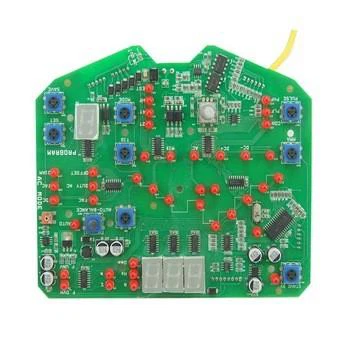
Building a world-class manufacturing base, manufacturing superior Quick-turn Prototype For LED Panel, Quick-turn Prototype For Fall Detection Devices, Led PCBA Manufacturing For High Quality Smart Home and cultivating and shaping first-class brands are the basis for achieving world-leading brands and building an evergreen foundation. We still uphold the belief of striving to repay the society, and continue to work hard to promote intelligent life, green ecological cycle and benefit the society. Welcome to join us!
 Company&Service
Shenzhen Baiqiancheng Electronic Co., Ltd (BQC) is a professional PCBA manufacturer with a factory area of 12000 square meters, and the company was established in 2003 and has since become a leading manufacturer in the pcba industry.
BQC provides a range of services, including SMT assembly, and through-hole assembly. They also offer testing and inspection services to ensure the quality of their products. BQC states that they have advanced production equipment, including automatic SMT machines, wave soldering machines, and AOI machines, which allows them to provide high-quality products and efficient services to their clients.
Production process
The production process for an inverter PCBA (Printed Circuit Board Assembly) typically involves the following steps:
1. Solder paste application: The first step is to apply solder paste to the circuit board. This is typically done using a stencil to ensure precise placement of the paste.
2. Component placement: Once the solder paste is applied, the components are placed on the board using pick-and-place machines. The placement of components must be accurate to ensure that the circuit works correctly.
3. Reflow soldering: The circuit board is then placed in a reflow oven where the solder paste is melted, and the components are soldered onto the board.
4. Inspection: After soldering, the circuit board is inspected to ensure that all components are correctly placed and soldered. This step helps to identify any defects or issues that may have arisen during the manufacturing process.
5. Testing: Once the inspection is complete, the circuit board is tested to ensure that it functions correctly. This step involves applying power to the board and verifying that the output voltage and current meet the specified requirements.
6. Packaging: Once the board is tested, it is packaged for shipping. This typically involves placing the board in an anti-static bag and then placing it in a box for shipment.
PCBA package and delivery
PCBA package refers to the way in which printed circuit board assemblies (PCBAs) are packaged for transport or storage.
PCBAs can be packaged in a variety of ways, depending on the requirements of the application and the manufacturing process. Some common PCBA packaging methods include:
1. Anti-static bag: This is a common packaging method for PCBAs that need to be protected from static electricity during transport or storage. The bag is made of a special anti-static material that prevents static buildup and discharge.
2. Vacuum-sealed bag: This packaging method is used to protect PCBAs from moisture and other contaminants during transport or storage. The bag is vacuum-sealed to prevent any air or moisture from entering.
3. Tray packaging: PCBAs can be packaged in trays for easy handling and transport. The trays can be made of plastic or other materials and are designed to securely hold the PCBAs in place.
PCBA shipment typically involves packaging the PCBAs securely to prevent damage during transit, and then sending them via a shipping carrier such as UPS, FedEx, or DHL. The shipping carrier will transport the PCBAs to the intended destination according to the shipping method and timeframe selected by the customer.
The exact details of PCBA shipment will depend on the specific manufacturer and shipping carrier being used. It's important to work with a reputable manufacturer and carrier to ensure that the PCBAs are delivered on time and in good condition.
Values
1. Quality: Providing high-quality products or services that meet or exceed customer expectations can be a significant value proposition. Customers are often willing to pay a premium for quality products that they can rely on.
2. Convenience: Businesses that make it easy for customers to purchase and use their products or services can add value by saving customers time and effort. Convenience can come in the form of online ordering, fast shipping, easy-to-use products, or efficient customer support.
3. Innovation: Businesses that innovate and bring new products or services to the market can add value by providing customers with something that they didn't even know they wanted. Innovations can solve customer problems, improve efficiency, or enhance the user experience.
Our company integrates many years of professional sales and on-site practical experience in the field of LED Tower Warning Light 940V0 SMD LED PCB Board Module, vigorously enhances the added value of products for our respected customers, and reduces cost consumption. All along, we have always been consumer-oriented and always started from the needs of our customers. Creating a quality enterprise, producing quality products, and providing quality services are the missions of all our employees.
Hot Tags: Robot PCBA/OEM Manufacturer from Shenzhen, China, manufacturers, factory, customized, pcb assembly for smart home devices, pcb assembly with duty free import, Engineering Capacity, printed circuit board manufacturing, green manufacturing in pcb assembly, fault diagnosis in pcb assembly
[[ProKeywords]]


