


Products Description
The PCBA for Modem serves as the core communication bridge for broadband and dial‑up data transmission. It integrates a digital signal processor (DSP) with analog front‑end circuits to modulate and demodulate signals across telephone lines, coaxial cables, or fiber interfaces. The board features a high‑performance line driver with adaptive equalization and echo cancellation, maintaining reliable connections under varying line conditions. Multiple interface options – Ethernet, USB, or serial ports – are available for connecting to routers, computers, or embedded systems. Power management circuitry ensures stable voltage rails for the DSP, memory, and line driver while minimizing heat dissipation. The multi‑layer PCB design separates sensitive analog sections from digital noise sources, preserving signal integrity and reducing bit errors. Surge protection components on the line interface guard against lightning strikes and power cross events, meeting global telecommunications standards. Compact and thermally optimized, this PCBA fits into customer premises equipment, industrial remote terminals, or IoT gateway devices requiring robust wired connectivity.
PCBA Display


Production and Quality
Our manufacturing process for communication control boards follows rigorous quality protocols to ensure reliable data transmission. Each board undergoes In‑Circuit Test (ICT) for component verification and a comprehensive Functional Test (FCT) using a line simulator. The FCT validates modulation/demodulation across multiple carrier frequencies, echo cancellation performance, and interface connectivity (Ethernet, USB, or serial). All analog sections are tested for distortion and signal‑to‑noise ratio against specifications.
We utilize advanced SMT lines with 3D solder paste inspection (SPI), Automated Optical Inspection (AOI), and X‑ray for BGA devices. A conformal coating is applied inline to protect against humidity and dust. Surge protection circuits are 100% verified with a calibrated impulse generator. Each board passes thermal cycling and extended burn‑in to screen early failures.
Our supply chain includes long‑term agreements with DSP and line driver suppliers, ensuring component availability. Standard lead time is 5‑6 weeks for volume orders. With high‑precision placement lines and dedicated telecom test racks, we maintain scalable capacity to meet customer premises equipment deployment schedules while ensuring consistent quality and on‑time delivery.
Production Process
The assembly of mixed‑signal communication boards requires careful separation of analog and digital domains. Solder paste printing uses Type 4 powder with SPI (solder paste inspection) to ensure consistent volume on fine‑pitch pads for DSPs and analog front‑end ICs. Reflow is performed with a multizone oven under nitrogen atmosphere to minimize oxidation, especially critical for large ground planes that sink heat. X‑ray inspection verifies BGA joints and void levels beneath the DSP. After reflow, selective soldering attaches thru‑hole connectors (phone jacks, power inlets), while a press‑fit tool installs surge protection components. A programmable selective coating robot applies conformal coating, with mask tooling protecting edge connectors and test points. Panel depaneling uses routing with entry/backup material to prevent burrs on thin board sections. Final assembly includes installation of heatsinks with torque‑controlled drivers and any necessary EMI shielding cans. Each board is then placed in a powered test rack running a live line simulation before final visual inspection and vacuum‑sealed packing for moisture‑sensitive devices.
Q&A
Q: What is the most critical performance trade‑off when designing a low‑cost modem PCBA for consumer markets?
A: The trade‑off is analog front‑end performance versus component cost. A PCBA for Modem must maintain a bit error rate (BER) below 10^-7 even on noisy telephone lines, but adding expensive filters or higher‑grade op‑amps blows the bill of materials (BOM). We solve this by using a hybrid design: a moderately priced line driver plus adaptive DSP‑based filtering. The firmware continuously measures line noise and adjusts equalization coefficients. This shifts cost from hardware to software, which has near‑zero marginal cost per unit.
Q: How do you validate that the surge protection will work after years of repeated strikes?
A: We perform destructive sample testing on every production batch. A statistical sample of boards is subjected to a calibrated 6kV/3kA combination wave generator, per ITU‑T K.21 and GR‑1089 standards. Each board receives multiple surges at both normal and common mode. We monitor leakage current before and after each strike. Any board showing degradation fails the batch, triggering a full supply chain audit. Passed units are marked with a batch trace code that links back to the test records.
Q: Your modem PCBA is used in outdoor or industrial gateways. What extra steps do you take for reliability?
A: We add conformal coating on both sides of the PCB, not just the top. This prevents moisture ingress through vias. We also specify sealed relays for the line interface and select capacitors rated for 105°C operation (not the standard 85°C). The assembly is then subjected to a 48‑hour powered temperature/humidity cycle (-20°C to +70°C, 95% RH non‑condensing). After the cycle, the board must pass a full parametric test – not just a functional go/no‑go. This screens for subtle corrosion or electromigration that could cause field failure after years of service.
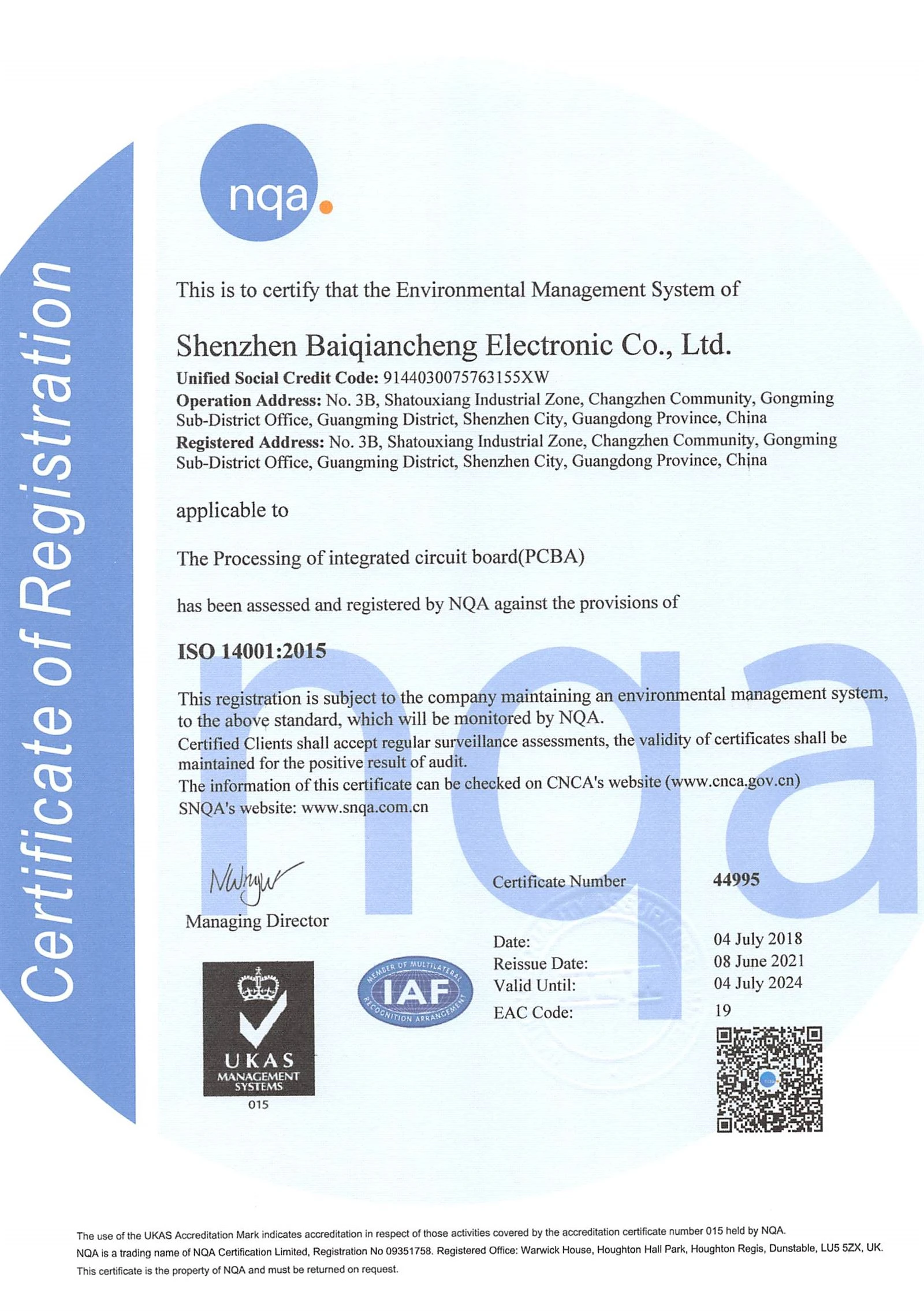
Certificates


Hot Tags: PCBA for Modem, China, manufacturers, factory, customized, Control Board Smt Dip, PCBA Service For Smart Home Devices, Through Hole PCB Board Assembly For Industrial Board, PCBA Automotive Mobile, turnkey services, PCB Assembly For LED Panel One Stop Service


