


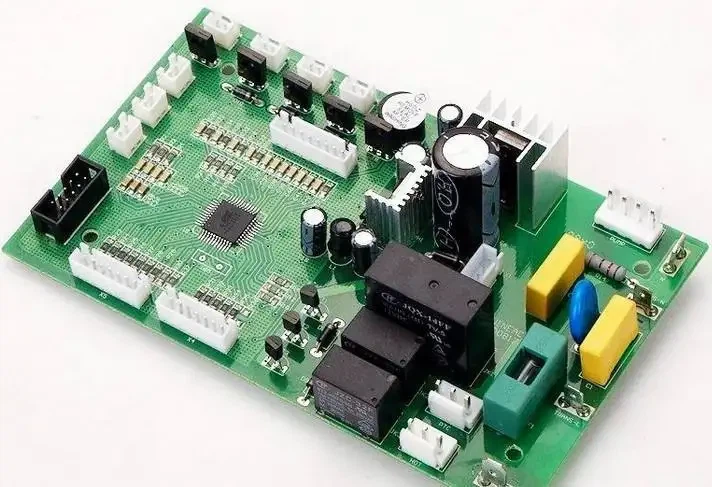


High Reliability PCB Assembly
一,Product Introduction
Industrial PCB Assembly Joint Design JDSM is a high-reliability connection technology tailored for industrial-grade printed circuit board (PCB) assembly. It integrates precision joint structure design, material compatibility optimization, and industrial-grade manufacturing processes to address the core demands of industrial electronic equipment for connection stability, environmental adaptability, and long-term service life.
The core value of JDSM lies in breaking through the limitations of traditional soldering joints in harsh industrial scenarios. It achieves precise control of joint geometry, solder wetting range, and intermetallic compound (IMC) formation through standardized design specifications and advanced manufacturing processes. This ensures that PCB assembly joints can withstand extreme conditions such as temperature fluctuations, mechanical vibration, electromagnetic interference, and chemical corrosion, while maintaining stable electrical conductivity and mechanical strength.
Widely compatible with surface mount technology (SMT) and through-hole technology (THT) assembly processes, JDSM technology supports the assembly of high-density, multi-layer industrial PCBs. It is applicable to various electronic components (including resistors, capacitors, integrated circuits, power modules, etc.) and meets the strict quality requirements of industrial control, automation, energy, and other fields for PCB assembly.

二,Specifications
1. Electrical Specifications
Operating voltage range: 0–600V DC/AC (customizable up to 1500V for high-voltage industrial applications)
Rated current: 0.5A–50A (adjustable based on joint cross-sectional area and component specifications)
Contact resistance: ≤10mΩ (for standard joints, tested at 25℃, 1A)
Insulation resistance: ≥10¹⁰Ω (between adjacent joints, 500V DC test)
Voltage drop: ≤50mV (at rated current, stable operation for 1000 hours)
2. Mechanical Specifications
Joint shear strength: ≥25MPa (for Sn-Ag-Cu solder joints, tested per IPC-TM-650 standard)
Tensile strength: ≥18MPa (for chip components, 0402–2512 package)
Vibration resistance: Complies with IEC 60068-2-6 standard, 10–2000Hz, 10g acceleration, 20-hour continuous test without joint failure
Shock resistance: Complies with IEC 60068-2-27 standard, 50g peak acceleration, 11ms pulse width, 100 cycles without structural damage
3. Environmental Specifications
Operating temperature range: -40℃ to +125℃ (extended version available for -55℃ to +150℃ for high-temperature industrial environments)
Humidity resistance: 85% RH (40℃, 1000 hours, no corrosion or joint degradation)
Corrosion resistance: Passes 500-hour salt spray test (ASTM B117 standard) for Industrial Grade 3 protection
Thermal cycling resistance: -40℃ to +125℃, 1000 cycles, solder joint cracking rate ≤1% (detected by X-ray inspection)
4. Process Specifications
Compatible PCB types: FR-4, Rogers high-frequency substrates, aluminum-based PCBs, ceramic substrates
Component compatibility: 0402–2512 chip components, QFP, BGA, CSP, THT through-hole components
Solder material: Sn-Ag-Cu (SAC305/SAC0307), Sn-Pb (for special industrial applications), lead-free compliant with RoHS/REACH standards
Joint design parameters: Solder fillet height 0.3–1.2mm, fillet angle 30°–60°, pad coverage rate ≥95%


三,Application Scenarios
1. Industrial Automation & Robotics
Application objects: Industrial robot controllers, servo drives, motion control modules, sensor signal processing boards
Core value: Withstands high-frequency vibration during robot operation and wide temperature fluctuations in factory environments; ensures stable signal transmission for precision control (e.g., PCB assembly joints in ABB/KUKA robot control units)
Typical cases: Servo amplifier PCBA joints for YASKAWA motors, industrial robot vision system PCB assembly
2. New Energy Equipment
Application objects: Solar inverter PCBs, wind power converter control boards, energy storage system (ESS) power management modules
Core value: Resists high temperature and humidity in outdoor/industrial indoor environments; ensures low contact resistance for efficient energy conversion; corrosion resistance to adapt to harsh outdoor conditions
Typical cases: PCB assembly joints for photovoltaic inverter power modules, energy storage battery management system (BMS) boards
3. Rail Transit Electronics
Application objects: Train control system PCBs, traction converter boards, on-board communication modules
Core value: Complies with EN 50155 railway electronic standards; withstands mechanical shock during train operation and extreme temperature changes (-40℃ to +85℃); ensures long-term reliability (service life ≥15 years)
Typical cases: PCB assembly for train traction control units, on-board signal processing modules
4. Industrial Control Systems
Application objects: PLC (Programmable Logic Controller) mainboards, DCS (Distributed Control System) I/O modules, industrial sensor interface boards
Core value: High anti-interference performance for industrial field electromagnetic environments; stable operation under continuous high-load conditions; precise joint design to support high-density component assembly
Typical cases: PCB assembly for Siemens/Allen-Bradley PLC modules, industrial process control system I/O boards
5. Medical Equipment (Industrial-Grade Medical Electronics)
Application objects: Medical imaging equipment (CT/MRI) control boards, clinical diagnostic instrument PCBs, hospital equipment power management modules
Core value: Complies with IEC 60601 medical electronic safety standards; low failure rate (MTBF ≥100,000 hours); pollution-free soldering process to meet medical hygiene requirements
Typical cases: PCB assembly joints for medical ultrasound equipment signal processing boards, diagnostic analyzer control modules

四,Company Introduction
BQC is a leading global provider of industrial-grade PCB assembly and joint design solutions, specializing in the R&D, design, and manufacturing of high-reliability industrial PCB assembly products. With over 20 years of experience in the industrial electronics field, the company has established a complete industrial chain layout covering joint design, material selection, precision assembly, and quality testing.
Core Strengths
Technology R&D: Boasts a professional R&D team of 50+ engineers, focusing on JDSM joint design optimization, high-temperature/high-reliability solder material research, and industrial PCB assembly process innovation. Holds 30+ patents related to PCB assembly joint design and manufacturing.
Quality Certification: The production base has obtained ISO 9001, IATF 16949 (automotive electronics), ISO 13485 (medical electronics), and AS9100 (aerospace) certifications. All products comply with IPC-A-610 (Acceptability of Electronic Assemblies) Class 3 standards for high-reliability applications.
Production Capacity: Equipped with 10+ high-precision SMT production lines (including Yamaha/Fuji placement machines), X-ray inspection equipment, thermal cycle test chambers, and vibration test platforms. Annual production capacity reaches 5 million sets of industrial PCB assemblies, supporting small-batch customization and mass production.
Customer Service: Establishes localized service networks in Europe, Asia, and North America, providing one-stop solutions from joint design consultation, prototype production, to mass manufacturing and after-sales technical support. Cooperates with well-known enterprises in industrial automation, new energy, and rail transit fields, gaining wide recognition for product reliability and technical professionalism.
Our mission is to provide customers with high-stability, long-life industrial PCB assembly solutions through advanced JDSM joint design and rigorous manufacturing processes, empowering the intelligent upgrade of global industrial electronics.
五,FAQ
1. What is the core difference between JDSM joint design and traditional PCB assembly joints?
JDSM joint design focuses on industrial-grade reliability optimization: it adopts precise solder fillet geometry design (controlling height, angle, and pad coverage) to enhance mechanical strength and thermal stability; selects solder materials with high compatibility with industrial substrates (e.g., SAC305 for high-temperature resistance); and integrates simulation analysis in the design stage to predict joint performance under harsh conditions. Traditional joints often prioritize basic connection functions, with insufficient consideration for industrial environment adaptability (e.g., vibration, corrosion resistance).
2. Can JDSM technology be applied to high-frequency/high-speed industrial PCBs?
Yes. JDSM joint design optimizes the solder fillet structure to reduce signal reflection and crosstalk; supports high-frequency substrates such as Rogers; and cooperates with impedance matching design during assembly to meet the signal transmission requirements of high-speed industrial PCBs (up to 10Gbps). It is widely used in industrial communication modules and high-frequency sensor PCBs.
Hot Tags: High Reliability PCB Assembly, China, manufacturers, factory, customized, PCBA OEM, energy storage BMS , PCBA in ventilation systems, Controllers Pcb Board Assembly, dip components, Pcba Smt Service


