




1.What is HDI?
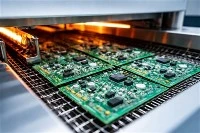
HDI, also known as High Density Interconnection (HDI), refers to circuit boards with dense circuits, multiple layers, and drilled holes less than 0.15mm. HDI adopts the addition layer method and micro blind hole manufacturing, usually in various forms of 1st and 2nd order interconnection.
HDI is often used in mid to high-end consumer electronics and areas with high board requirements, such as mobile phones, laptops, medical devices, aviation, etc.
2、 The Origin of HDI Board
When it comes to the origin of HDI boards, it is inevitable to mention the United States.
In April 1994, the American printed circuit board industry formed a collaborative association called ITRI (Interconnection Technology Re search lnstitute), which gathered multiple forces to research circuit board manufacturing technology. HDI was born in this association.
Five months later, in September 1994, ITRI conducted research on the production of high-density circuit boards, specifically known as the October Project. After about three years of research, on July 15, 1997, ITRI publicly released its research results - the Octoberproject phase1 round2 report evaluating micropores, officially launching a new era of "high-density interconnect HDI".
Since then, HDI has developed rapidly. In 2001, HDI has become the mainstream of mobile phone boards and Integrated circuit packaging carrier boards.
3、 What basic conditions do factories that produce HDI boards need to meet?
HDI belongs to high-end circuit board manufacturing, and it has a high threshold in terms of equipment, talent, and production control.
In terms of equipment, HDI requires brand new equipment, and the initial investment is very large.
CO laser drilling machine, with an average of $500000 to $600000 per unit
Horizontal copper plating production line PTH/CuPlating, with an average of 2.5~3 million US dollars
Laser direct imaging equipment with fine line exposure, over $1 million
Equipment for fine wire and solder mask exposure, over $1 million
Precision laminating machine, also worth over one million US dollars
A complete HDI equipment production line requires equipment investment of several million or even tens of millions. In addition, in order to accommodate various advanced equipment, a dust-free workshop must also be equipped.
In terms of personnel, HDI production requires multiple professional engineers. Including laser drilling engineers, HDI pressing engineers, HDI full process process engineers, circuit engineers, resistance welding engineers, senior engineering research and development personnel, it can be seen that the technical threshold for their production operations is high.
In terms of production control, HDI board factories need to have a complete production system, with no outsourcing of the entire process and strict control of product quality.
The above three points are the three basic points for evaluating the reliability of an HDI board factory.
4、 Domestic HDI manufacturing chaos
We mentioned above that the manufacturing threshold for HDI is very high, but it is strange that many PCB factories can accept HDI production orders, regardless of the size of the PCB factory.
In fact, any PCB factory can accept HDI boards, but most of the processes are outsourced, and the quality and delivery time cannot be controlled. The price is very high to ensure that HDI orders have sufficient profit margin. But price is not the most important thing. The fatal problem caused by outsourced processes is quality issues. Once HDI encounters quality problems, the losses are very significant.
The thickness of hole copper is one of the important factors affecting the reliability and lifespan of PCBs. When it is too thin, the conductive holes may be pulled apart during high-temperature or high current applications, leading to board failure.


