

What Is DFM in PCBA Manufacturing?
DFM stands for Design for Manufacturability. It refers to designing an electronic product with its future manufacturing process in mind.
In simple terms, DFM asks an important question:
Can this product be manufactured consistently, reliably, and cost-effectively at scale?
A good PCB design must not only satisfy electrical requirements. It should also be compatible with PCB fabrication, SMT assembly, inspection, functional testing, and mass production.
If DFM is introduced too late, a product may already have reached the prototype stage before manufacturing problems become visible. Correcting those issues later can increase engineering costs, delay production, and require significant redesign.
Common manufacturing problems include:
PCB layout limitations
Poor solder-pad design
BGA soldering difficulties
Insufficient component clearance
Component placement problems
Low PCB panel utilization
Long-lead-time components
Insufficient test points
Low production yield
Increased rework costs
The purpose of DFM is therefore not simply to identify design errors. Its broader goal is to reduce manufacturing risk before the product enters mass production.
What Does a PCBA DFM Review Typically Include?
A comprehensive PCBA DFM review normally covers several areas.
PCB Design Review
Engineering teams may review PCB layers, copper thickness, vias, traces, pads, solder masks, component clearances, and other design parameters to determine whether the PCB can be manufactured reliably.
For high-power applications, additional considerations may include:
Current-carrying capacity
Copper thickness
Thermal management
Creepage and clearance
High-voltage isolation
Heat dissipation
The correct PCB construction depends on the application's actual electrical, thermal, and environmental requirements. Using the thickest copper or most expensive material is not necessarily the best solution.
BOM Review
The Bill of Materials is another critical part of PCBA manufacturing.
An engineering and sourcing team should evaluate:
Component availability
Lead time
Product lifecycle
MOQ
Approved alternatives
Manufacturer
Part number
Supply-chain risk
This is particularly important for AI infrastructure, power electronics, energy storage, automotive, and industrial electronics, where demand for certain components can change rapidly.
A DFM review that considers both PCB design and BOM availability can identify potential supply-chain problems before production begins.
SMT Assembly Review
SMT manufacturing requires careful consideration of component dimensions, spacing, orientation, solder pads, and placement processes.
For components such as 0201, 01005, fine-pitch BGA, and QFN, tighter process control may be required for solder-paste printing, component placement, and reflow.
For complex PCB assemblies, SPI, AOI, and X-ray inspection can be combined according to the structure and risk profile of the product.
The objective is not simply to use as many inspection technologies as possible, but to select the appropriate inspection method for each potential defect.
Functional Test Review
Passing SMT inspection does not necessarily mean that a PCBA will perform correctly in the final application.
For power electronics, BMS, PCS, industrial control, and communication equipment, Functional Circuit Testing can be used to verify actual product performance.
Depending on the product, FCT may verify:
Input voltage
Output voltage
Current
Communication interfaces
Sensors
Control signals
Protection functions
Load performance
For mass-production programs, test fixtures, software-based testing, and MES traceability can also be integrated into the manufacturing process.
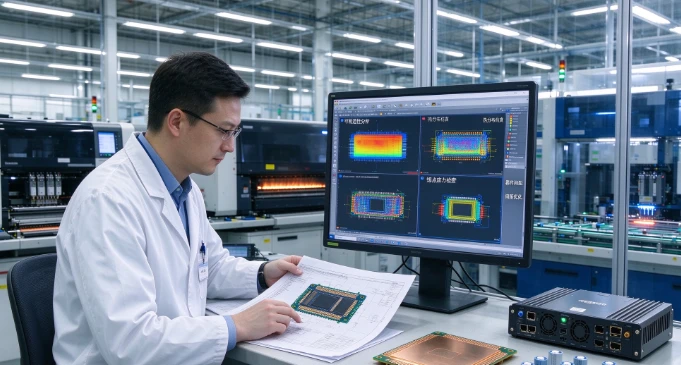
Why Should DFM Be Performed Before PCBA Quotation?
Many OEMs request a PCBA quotation by providing only a Gerber file, BOM, and assembly drawing.
This approach can produce a price, but it does not necessarily provide a complete view of manufacturing feasibility.
A more effective process is:
Gerber + BOM → DFM Review → Component Availability Check → Manufacturing Risk Analysis → Cost Optimization → PCBA Quotation
This approach allows potential problems to be identified before production.
For example, if an MCU has an extended lead time, an EMS provider may recommend an alternative component. If a connector or component creates an SMT manufacturing problem, the design team can evaluate alternatives before mass production.
This is especially valuable during the development of new products.
Modern electronics manufacturing is increasingly moving from a traditional model-where an OEM completes the design and then sends it to an EMS company-to a collaborative model in which the EMS partner participates earlier in product development.
How BQC Uses DFM to Reduce Manufacturing Risk
BQC Electronics can support customers during the early stages of PCBA development and manufacturing planning.
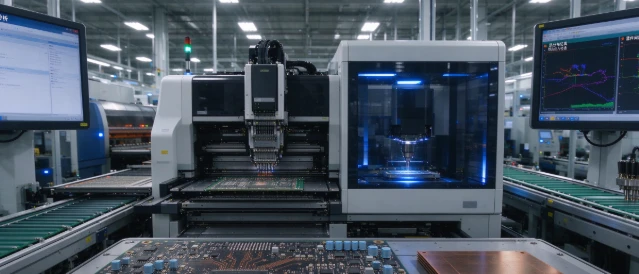
Based on customer-provided Gerber files, BOMs, and relevant technical documentation, BQC can evaluate manufacturing feasibility and identify potential risks related to PCB design, components, sourcing, SMT assembly, testing, and production.
For complex products, the manufacturing process can cover:
DFM → Component Sourcing → PCB Assembly → Testing → Aging → Box Build
This integrated approach is particularly relevant to AI infrastructure, power electronics, energy storage, BMS, PCS, industrial control, and other high-reliability electronic applications.
The role of a modern PCBA manufacturing partner is not simply to assemble the customer's PCB. A capable EMS partner should also help identify potential problems before production, optimize the manufacturing process, and improve supply-chain and production reliability.
Ultimately, the value of DFM is to help transform a product from something that can be designed into something that can be manufactured reliably, consistently, and cost-effectively at scale.


