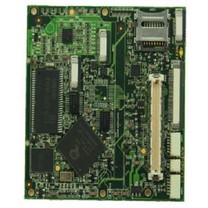
As consumer electronics, medical modules and automotive sensors keep shrinking, fine‑pitch SMT has become standard for miniaturized PCBA. Fine‑pitch packages typically include tight-pin BGAs, QFNs and 01005 chips, with pad pitches down to 0.3mm or even lower. While these components deliver high functionality in compact space, they introduce a series of tough process challenges for assembly houses.
Solder paste printing sits at the top of the risk list. Ultra-fine aperture stencils demand precise laser cutting and surface treatment. Insufficient paste volume causes open joints, while excess paste easily triggers bridging between adjacent pads. Stencil cleaning frequency and paste viscosity control must be tightly monitored throughout production.
Component placement is another critical bottleneck. Advanced placement machines are required for high positioning accuracy. Minor offset, tilt or tombstoning will directly lead to functional failures. Moreover, the small thermal mass of tiny parts makes reflow profile tuning tricky. Unbalanced heating may result in cold solder joints, voids or component thermal damage.
Inspection and quality validation also grow harder. Traditional optical inspection can hardly catch hidden defects under BGA packages, so AXI combined with 3D SPI is mandatory. Material and substrate factors add complexity too; PCB warpage during reflow often shifts pad alignment and compromises soldering quality.
For PCBA manufacturers, stable fine‑pitch SMT relies on integrated control over stencil design, paste parameters, placement accuracy, reflow curve and inspection workflows. Continuous process optimization is essential to maintain yield and reliability for high-density miniaturized assemblies.