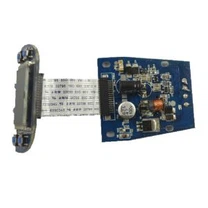
Technological innovation is constantly developing and changing. For example, in SMT chip processing, in addition to the most common chip processing methods of PCB circuit boards and printed solder pastes that are soldered through reflow soldering, we also have a lot of things based on product characteristics. Special processes, such as SMT, DIP plug-in, etc., among which ESC is also a welding process.
ESC (Epoxy Encapsulated Solder Connection) technology is an epoxy resin sealing soldering method, which uses a new type of resin-wrapped solder to heat the connection. ESC technology is a new technology that replaces ACF, which simplifies the process and reduces costs.
1. ESC technology process
First, apply solder paste resin glue to the pad of the hard board, then align and affix the electrodes of the soft board to the pad of the hard board, and finally achieve the soldering and resin curing by heating and pressing at the same time.
Second, ESC and ACF technology comparison
Because ACF technology has some shortcomings in process and connection strength. The process of ACF is more complicated than ESC; ESC has the following advantages compared with ACF:
①The process is simple, saving the space for attaching ACF tape;
② Welding + resin curing, enhance the connection arc and improve reliability;
③ More application areas.
3. Application of ESC technology
① New development of Flip Chip flip chip assembly process. ESC technology can realize Flip Chip reflow soldering and underfill glue curing.
②MM-ESC technology (module and module combination technology).
③Combination technology between connectorless substrates of new generation mobile phones
The use of ESC technology can realize the connectorless connection between the 5 modules of the new generation mobile electronic language, which saves space, reduces the thickness of the machine, and also improves the connection strength and reliability.