

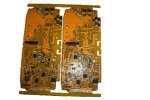
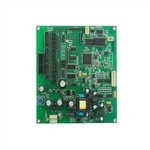
In the dynamic world of electronics, Printed Circuit Board Assembly (PCBA) stands as a cornerstone, integrating various components to bring electronic devices to life. As an experienced Electronic PCBA Assembly supplier, I've witnessed firsthand the evolution of these components and their crucial role in the assembly process. This blog post will delve into the common components found in Electronic PCBA Assembly, offering insights into their functions, types, and significance.
Resistors
Resistors are fundamental components in PCBA, designed to restrict the flow of electric current. They are used to control voltage levels, divide voltages, and limit current in a circuit. The resistance value of a resistor is measured in ohms (Ω), and it determines how much the current will be restricted.
There are several types of resistors, including fixed resistors, variable resistors, and special resistors. Fixed resistors have a constant resistance value, while variable resistors, such as potentiometers and rheostats, allow for adjustable resistance. Special resistors, like thermistors and varistors, change their resistance based on external factors such as temperature or voltage.
In PCBA, resistors are typically surface-mounted devices (SMDs) or through-hole components. SMD resistors are smaller and more compact, making them ideal for high-density PCBs. Through-hole resistors, on the other hand, are larger and have leads that are inserted through holes in the PCB and soldered on the other side.
Capacitors
Capacitors are another essential component in PCBA, used to store and release electrical energy. They consist of two conductive plates separated by an insulating material called a dielectric. When a voltage is applied across the capacitor, it stores electrical charge on its plates.
Capacitors are used for various purposes in a circuit, including filtering, coupling, decoupling, and timing. Filtering capacitors are used to remove unwanted noise and ripple from a power supply. Coupling capacitors are used to transfer AC signals between different stages of a circuit while blocking DC signals. Decoupling capacitors are used to provide a stable power supply to sensitive components by reducing voltage fluctuations. Timing capacitors are used in conjunction with resistors to create time delays in a circuit.
There are many types of capacitors, such as ceramic capacitors, tantalum capacitors, electrolytic capacitors, and film capacitors. Each type has its own characteristics, such as capacitance value, voltage rating, and temperature coefficient. In PCBA, ceramic capacitors are the most commonly used due to their small size, low cost, and high reliability.
Diodes
Diodes are semiconductor devices that allow current to flow in only one direction. They have two terminals, an anode and a cathode, and are used to rectify AC signals into DC signals, protect circuits from reverse voltage, and perform other functions.


The most common type of diode is the rectifier diode, which is used in power supply circuits to convert AC voltage into DC voltage. Another type of diode is the Zener diode, which is used to regulate voltage in a circuit. Zener diodes have a specific breakdown voltage, and when the voltage across them exceeds this value, they start conducting in the reverse direction, maintaining a constant voltage across the load.
Light-emitting diodes (LEDs) are also a type of diode that emits light when current flows through them. LEDs are widely used in PCBA for indicator lights, displays, and lighting applications. They are available in various colors, sizes, and brightness levels.
Transistors
Transistors are semiconductor devices that can amplify or switch electronic signals. They are the building blocks of modern electronics and are used in a wide range of applications, from simple amplifiers to complex microprocessors.
There are two main types of transistors: bipolar junction transistors (BJTs) and field-effect transistors (FETs). BJTs have three terminals, a base, an emitter, and a collector, and are used for amplification and switching applications. FETs have three terminals, a gate, a source, and a drain, and are used for high-input impedance applications, such as amplifiers and switches.
In PCBA, transistors are used to amplify weak signals, control the flow of current, and perform logical operations. They are typically SMDs or through-hole components, depending on the application requirements.
Integrated Circuits (ICs)
Integrated circuits, also known as microchips or chips, are complex electronic circuits that are fabricated on a single semiconductor wafer. They contain thousands or even millions of transistors, resistors, capacitors, and other components, all integrated into a small package.
ICs are used in a wide range of applications, from consumer electronics to industrial control systems. They can perform various functions, such as processing data, storing information, generating signals, and controlling other components.
There are many types of ICs, such as microprocessors, microcontrollers, memory chips, logic chips, and analog chips. Each type has its own specific functions and features. In PCBA, ICs are typically SMDs, and they are soldered onto the PCB using advanced assembly techniques.
Connectors
Connectors are used to establish electrical connections between different components or between a PCB and an external device. They come in various shapes, sizes, and types, depending on the application requirements.
Some common types of connectors used in PCBA include board-to-board connectors, wire-to-board connectors, and I/O connectors. Board-to-board connectors are used to connect two or more PCBs together. Wire-to-board connectors are used to connect wires or cables to a PCB. I/O connectors are used to connect a PCB to external devices, such as keyboards, mice, monitors, and printers.
Connectors are an important part of PCBA, as they ensure reliable electrical connections and easy installation and maintenance of the electronic device.
Inductors
Inductors are passive components that store energy in a magnetic field when current flows through them. They are made of a coil of wire wound around a core, which can be made of air, ferrite, or other materials.
Inductors are used in various applications, such as filtering, energy storage, and impedance matching. In PCBA, inductors are typically used in power supply circuits to filter out high-frequency noise and ripple. They are also used in RF circuits to tune and match the impedance of the circuit.
There are different types of inductors, such as air-core inductors, ferrite-core inductors, and iron-core inductors. Each type has its own characteristics, such as inductance value, quality factor, and saturation current.
Applications of PCBA Components
The components mentioned above are used in a wide range of electronic devices, including Handheld Medical Testing Equipment PCBA, PCBA For EV Inverter, and Control Board For Electric Fireplace Smart Electric Lock Pcba.
In handheld medical testing equipment, PCBA components are used to measure and analyze various physiological parameters, such as blood pressure, heart rate, and glucose levels. The components need to be highly accurate, reliable, and miniaturized to fit into the small form factor of the handheld device.
In EV inverters, PCBA components are used to convert DC power from the battery into AC power to drive the electric motor. The components need to be able to handle high voltages and currents, and they need to be efficient and reliable to ensure the performance and safety of the electric vehicle.
In control boards for electric fireplaces and smart electric locks, PCBA components are used to control the operation of the device, such as turning on and off the fireplace or unlocking the door. The components need to be able to communicate with other devices, such as sensors and actuators, and they need to be secure and reliable to prevent unauthorized access.
Conclusion
As an Electronic PCBA Assembly supplier, I understand the importance of using high-quality components in the assembly process. The common components discussed in this blog post play a crucial role in the functionality and performance of electronic devices. By carefully selecting and integrating these components, we can ensure that our PCBA products meet the highest standards of quality and reliability.
If you are in need of PCBA services for your electronic products, we would be glad to discuss your requirements and provide you with a customized solution. Our experienced team of engineers and technicians can help you design, prototype, and manufacture high-quality PCBA products that meet your specific needs. Contact us today to start the procurement negotiation process and take your electronic products to the next level.
References
- "Electronic Devices and Circuit Theory" by Robert L. Boylestad and Louis Nashelsky
- "Microelectronic Circuits" by Adel S. Sedra and Kenneth C. Smith
- "The Art of Electronics" by Paul Horowitz and Winfield Hill