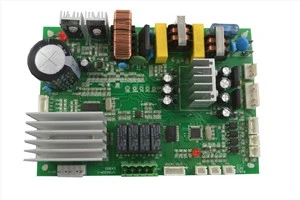
The PCBA Salt Spray Test is primarily designed to assess corrosion resistance. During this test, PCBA samples are exposed to a fine mist of saline solution, typically 5% sodium chloride (NaCl), at controlled temperatures around 35°C. This environment simulates coastal, marine, or winter road conditions where salt exposure accelerates metal corrosion. The test mainly evaluates PCB surface finishes, solder joints, connectors, and protective coatings. Failures often appear as oxidation, rust, or increased contact resistance.
In contrast, the Damp Heat Test focuses on moisture-related reliability. PCBA assemblies are subjected to high temperature and high humidity conditions, commonly 85°C and 85% relative humidity, over extended periods. This test is used to identify risks such as insulation resistance degradation, leakage current, and electrochemical migration caused by moisture and ionic contamination. It is especially effective for evaluating PCB cleanliness, spacing design, and conformal coating performance.
While salt spray testing targets metal corrosion, damp heat testing evaluates long-term moisture endurance and electrical insulation stability. Automotive electronics, outdoor equipment, and coastal applications often require salt spray testing, whereas industrial control systems, power electronics, and enclosed devices benefit more from damp heat testing.
For high-reliability PCBA applications, combining both tests provides comprehensive validation against environmental stresses, ensuring durable and dependable electronic performance.