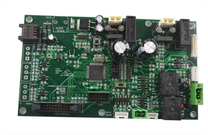
The shelf life of PCBs primarily depends on the surface treatment process.
Common OSP (Organic Solder Spray) PCBs have a recommended storage time of approximately 6 months;
HASL (Hydrogen-on-Solder) PCBs can generally be stored for 12 months;
Immersion Silver and Immersion Tin PCBs have a recommended storage time of 6 to 12 months;
ENIG (Immersion Gold) PCBs, due to their excellent oxidation resistance, can be stored for 12 to 24 months under good storage conditions, making it one of the processes with the best storage stability currently available.
The main factors affecting PCB shelf life include oxidation and moisture absorption. Prolonged exposure to air will gradually oxidize the copper layer on the PCB pads, reducing solder wettability and increasing the risk of cold solder joints and poor soldering. Simultaneously, the FR4 substrate absorbs moisture from the air, which may cause blistering, delamination, or even board bursting during reflow soldering. Therefore, a good storage environment is crucial for maintaining PCB quality.
To extend the lifespan of PCBs, it is recommended to store them in an environment with a temperature of 20°C to 25°C and a relative humidity below 50%, using protective measures such as vacuum packaging, moisture-proof aluminum foil bags, desiccants, and humidity indicator cards. PCBs should be put into production as soon as possible after opening to avoid prolonged exposure to air.
PCBs exceeding their recommended storage period do not necessarily need to be scrapped. Their condition can be confirmed through visual inspection and solderability testing before production. If the PCB has a risk of moisture absorption, it can be baked at 105°C to 125°C for 4 to 8 hours to remove internal moisture. However, it should be noted that baking only removes moisture and cannot restore oxidized solder pad surfaces.
In general, proper warehousing management and a suitable storage environment can effectively extend PCB lifespan, improve SMT assembly yield, and enhance product reliability. Companies should select appropriate surface treatment processes based on product requirements and manage inventory according to the First-In, First-Out (FIFO) principle to reduce production risks and ensure final product quality.