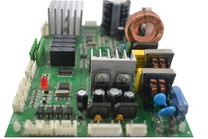
In PCB production and acceptance, board color is often regarded as a cosmetic detail. Most projects only conduct a simple check on color deviations, assuming they do not affect functionality. In reality, such subtle color changes may serve as "early warning signals" of material ratio or process deviations. Especially in high-speed and high-power scenarios, ignoring them could plant hidden reliability hazards.
The color of PCB boards is determined by the resin system, glass fiber content, and filler ratio. Any deviation from standard material proportions or process parameters will be directly reflected in the color, and may also cause electrical performance to deviate from design specifications. Essentially, color abnormality is a "visual signal" of material and process conditions.
The impact of color abnormality on PCB performance focuses on three aspects:
First, it interferes with dielectric properties. Color depth deviations mostly correspond to an imbalance in the resin-to-glass fiber ratio. In high-frequency and high-speed scenarios, this alters the dielectric constant, undermines impedance matching, and leads to signal transmission distortion.
Second, it triggers the risk of mismatched Coefficient of Thermal Expansion. Abnormal resin ratio or curing degree will cause CTE fluctuations. During reflow soldering, long-term thermal cycling, it may result in interlayer stress concentration, and in severe cases, solder joint cracks, conduction abnormalities, and shortened product lifespan.
Third, it masks PCB manufacturing process deviations. Color abnormality may indicate hidden problems such as uneven resin flow and improper lamination parameter control. Such minor defects are difficult to detect in initial electrical testing but will be amplified under harsh operating conditions, eventually leading to reliability failures.
The judgment of color abnormality should not be limited to visual inspection, but require comprehensive evaluation combining material parameters, electrical test data, and process records. For high-reliability projects, color abnormality should be included in pre-acceptance standards, and key indicators verified through sample testing to control risks at the source.
In summary, PCB board color abnormality is by no means a mere cosmetic issue, but a "barometer" of materials and processes. Only by conducting joint analysis of color abnormality with electrical performance and process conditions can potential performance hazards in high-end scenarios be avoided, and the reliability foundation of electronic equipment be consolidated.