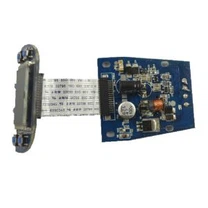
The uses of integrated circuits as of 2011 are very widespread due to the unique advantages that they offer over that of traditional electronic circuits. They are found in every electronic device that has some type of microprocessor control, from cell phones and portable music players to gaming systems, personal computers, and other digital devices. This is because an integrated circuit (IC) or chip by contemporary 21st century standards is an extremely sophisticated device, packing up to millions of electronic components like transistors, resistors, and capacitors into an area of a few square centimeters on a wafer of silicon. The early uses of integrated circuits were fairly limited, however, when the first models were built in 1958 and 1959, as they were primitive devices at the time that were difficult to mass produce.
Jack Kilby, a researcher at Texas Instruments in the United States, is credited with being one of the first people to see the potential benefits and uses of integrated circuits. He was awarded the Nobel Prize in Physics in 2000 for his contribution to the development of the electronic circuit. Though the concept for the IC chip can be traced to earlier research as far back as 1949 by German engineers, Kilby and another US-based researcher named Robert Noyce were the first to file patents for the idea.