

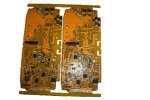
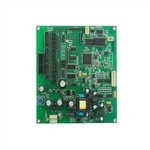
In the world of electronics manufacturing, Surface Mount Technology (SMT) PCB assembly is a pivotal process that involves mounting electronic components onto a printed circuit board (PCB). As a leading provider of SMT PCB assembly services, we understand the importance of using the right materials to ensure high - quality, reliable, and efficient production. In this blog, we will delve into the various materials used in SMT PCB assembly services.

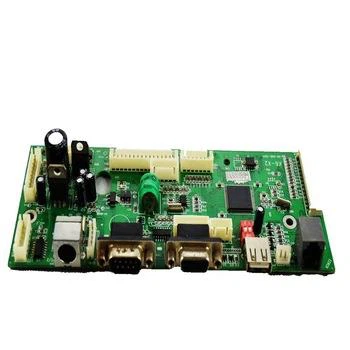
Printed Circuit Boards (PCBs)
The foundation of any SMT PCB assembly is the PCB itself. PCBs are typically made from a variety of materials, each with its own unique properties and applications.
Substrate Materials
- FR - 4: This is the most commonly used substrate material in PCB manufacturing. FR - 4 is a glass - reinforced epoxy laminate that offers excellent mechanical and electrical properties. It has good heat resistance, high insulation resistance, and is relatively inexpensive. FR - 4 is suitable for a wide range of applications, from consumer electronics to industrial control systems.
- High - Tg FR - 4: High - glass transition temperature (High - Tg) FR - 4 is an enhanced version of standard FR - 4. It has a higher Tg, which means it can withstand higher temperatures without deforming. This makes it ideal for applications that generate a lot of heat, such as power supplies and high - performance computing.
- Polyimide: Polyimide is a high - performance substrate material known for its excellent thermal stability, chemical resistance, and flexibility. It is often used in applications where space is limited and flexibility is required, such as flexible PCBs for wearable devices and aerospace applications.
Copper Foil
Copper foil is used to create the conductive pathways on the PCB. The thickness of the copper foil can vary depending on the application requirements. Thicker copper foils are typically used for high - current applications, while thinner foils are suitable for low - power and high - density circuits. The purity of the copper is also important, as impurities can affect the conductivity and reliability of the PCB.
Solder Paste
Solder paste is a crucial material in SMT PCB assembly. It is a mixture of solder alloy powder and flux, and it is used to attach surface - mount components to the PCB.
Solder Alloy
- Tin - Lead (Sn - Pb): Historically, tin - lead solder alloys were widely used in PCB assembly due to their good wetting properties, low melting point, and excellent mechanical strength. However, due to environmental concerns, the use of lead in electronics has been restricted in many countries.
- Lead - Free Alloys: With the increasing demand for environmentally friendly electronics, lead - free solder alloys have become the norm. The most commonly used lead - free solder alloy is tin - silver - copper (Sn - Ag - Cu), also known as SAC. SAC alloys offer good mechanical properties, high reliability, and a relatively low melting point. Other lead - free alloys include tin - copper (Sn - Cu) and tin - bismuth (Sn - Bi).
Flux
Flux is an important component of solder paste. It helps to remove oxides from the surfaces of the PCB pads and component leads, improve the wetting of the solder, and prevent re - oxidation during the soldering process. There are different types of fluxes, including rosin - based fluxes, water - soluble fluxes, and no - clean fluxes. Rosin - based fluxes are widely used due to their good soldering performance, but they require cleaning after soldering. Water - soluble fluxes can be easily cleaned with water, while no - clean fluxes leave behind a minimal residue that does not require cleaning.
Electronic Components
The electronic components used in SMT PCB assembly can be broadly classified into passive components and active components.
Passive Components
- Resistors: Resistors are used to control the flow of electric current in a circuit. They are available in various types, including carbon film resistors, metal film resistors, and thick - film resistors. The resistance value of a resistor is determined by its material, size, and manufacturing process.
- Capacitors: Capacitors store and release electrical energy. They are used for filtering, coupling, and decoupling in electronic circuits. Common types of capacitors include ceramic capacitors, tantalum capacitors, and aluminum electrolytic capacitors. Each type has its own characteristics in terms of capacitance, voltage rating, and temperature stability.
- Inductors: Inductors are used to store energy in a magnetic field. They are commonly used in power supplies, filters, and oscillators. Inductors can be made from various materials, such as ferrite, iron powder, and air - core.
Active Components
- Integrated Circuits (ICs): ICs are the heart of modern electronics. They contain multiple electronic components, such as transistors, diodes, and resistors, integrated onto a single chip. ICs can be classified into different types, including microprocessors, microcontrollers, memory chips, and analog ICs.
- Transistors: Transistors are used for amplification, switching, and signal processing in electronic circuits. There are different types of transistors, such as bipolar junction transistors (BJTs) and field - effect transistors (FETs).
Adhesives
Adhesives are used in SMT PCB assembly to hold components in place during the soldering process, especially for components that are prone to movement or vibration.
Epoxy Adhesives
Epoxy adhesives are widely used in SMT PCB assembly due to their high strength, good chemical resistance, and excellent adhesion properties. They can be used to attach components such as large - size ICs, connectors, and heat sinks to the PCB.
Acrylic Adhesives
Acrylic adhesives offer fast curing times and good flexibility. They are often used for applications where a quick assembly process is required, such as in the production of consumer electronics.
Stencils
Stencils are used to apply solder paste accurately onto the PCB pads. They are typically made from stainless steel or nickel.
Stainless Steel Stencils
Stainless steel stencils are the most commonly used type of stencils in SMT PCB assembly. They are durable, have good dimensional stability, and can be easily cleaned. The thickness of the stainless steel stencil can be adjusted according to the size and type of components being assembled.
Nickel Stencils
Nickel stencils offer better release properties compared to stainless steel stencils. They are often used for high - density PCB assembly, where the accurate deposition of solder paste is crucial.
At our SMT PCB assembly service, we are committed to using the highest - quality materials to ensure the best possible results for our customers. We offer a wide range of services, including Smart Electrician Pcb Assembly Pcba, Power - wheelchairs Control Board Assembly, and SMT&DIP Assembly Service.
If you are looking for a reliable SMT PCB assembly service provider, we would love to hear from you. Whether you have a small - scale prototype or a large - scale production order, our experienced team can provide you with customized solutions to meet your specific requirements. Contact us today to start a procurement discussion and take your electronics project to the next level.
References
- IPC - A - 610: Acceptability of Electronic Assemblies.
- J - STD - 001: Requirements for Soldered Electrical and Electronic Assemblies.
- Madhavan Swaminathan, et al. "High - Speed Digital Design: A Handbook of Black Magic." Pearson Education, 2001.